



Collagen has become one of the most popular ingredients in the wellness and beauty industry, attracting attention from people looking to support healthier-looking skin, stronger nails, and overall wellbeing. As the body’s most abundant protein, collagen plays an essential role in providing structure to the skin, bones, tendons, cartilage, and other connective tissues. However, as people age, the body’s natural collagen production gradually declines, leading many to explore collagen supplements as part of their daily routines.
Among the most common options available are collagen powder and collagen capsules. Both forms are designed to deliver collagen peptides or other collagen ingredients, but they differ in preparation, dosage, convenience, and how easily they fit into everyday habits. This often raises an important question: which form does the body absorb better?
The answer is more nuanced than simply choosing between a powder and a capsule. Collagen absorption depends largely on the formulation, the type of collagen used, the amount consumed, and how the body digests and processes it. For hydrolysed collagen, also known as collagen peptides, both powder and capsule formats can deliver similar ingredients, provided they contain comparable formulations and doses.
For anyone considering collagen supplementation, understanding these differences can help make the decision easier. Whether your priority is convenience, dosage flexibility, or supporting specific wellness goals, here is everything you need to know about collagen powder versus collagen capsules and which option may be right for you.
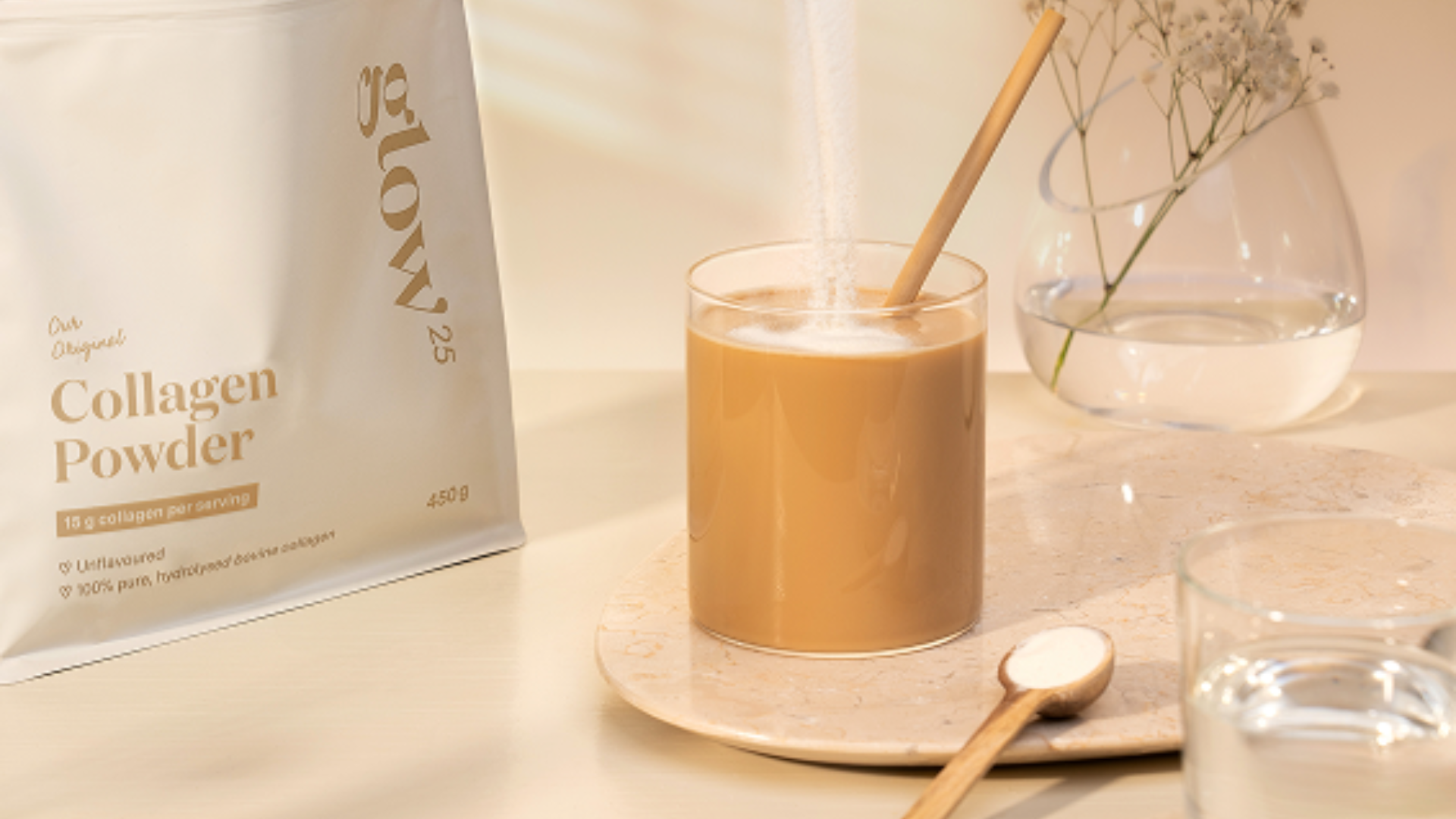 1. Collagen Powder – The Flexible Choice for Daily Supplementation
Collagen powder is one of the most widely used forms of collagen supplementation because it allows users to consume relatively large amounts of collagen without swallowing multiple capsules. It is commonly available as hydrolysed collagen peptides, which are produced by breaking collagen proteins into smaller peptide fragments that are easier to digest.
One of the biggest advantages of collagen powder is its dosage flexibility. Many collagen powder products provide several grams of collagen in a single serving, making it easier to match the quantities used in some clinical studies. By comparison, capsules often contain considerably smaller amounts per unit, meaning users may need to take several capsules to achieve a similar daily intake.
Another advantage is its versatility. Depending on the formulation, collagen powder can be mixed into water, smoothies, milk, or other beverages. Some products are designed to dissolve easily and have a relatively neutral taste, allowing them to fit into an existing morning routine without much effort.
Collagen powder can also be available in different formulations, including marine collagen sourced from fish and bovine collagen sourced from cattle. Some products include additional ingredients such as vitamin C, which contributes to normal collagen formation in the body. However, the presence of additional ingredients does not automatically make a supplement more effective, and people who already obtain sufficient vitamin C through their diet may not need extra supplementation.
When it comes to absorption, hydrolysed collagen powder is digested into smaller peptides and amino acids that the body can absorb through the digestive tract. Research has identified certain collagen-derived peptides in the bloodstream following oral consumption, although their presence does not necessarily mean that every supplement produces the same effects.
It is important to understand that collagen powder does not automatically absorb better simply because it is in powder form. Its main practical advantage is that it can deliver larger doses conveniently, particularly for people following a supplementation routine based on the amounts used in research.
For individuals who prefer mixing supplements into their drinks and want greater control over their daily intake, collagen powder is a practical option worth considering.
 2. Collagen Capsules – The Convenient Option for Everyday Use
For those who prefer a simple and portable supplement, collagen capsules offer an alternative to powders. These products typically contain collagen peptides or other collagen ingredients enclosed in a capsule shell, allowing users to take their supplements with water without preparing a drink.
One of the biggest advantages of collagen capsules is convenience. They are easy to carry when travelling, working, or attending school, and they do not require mixing or measuring. For people with busy schedules, this simplicity can make it easier to maintain a consistent supplementation routine.
Capsules may also be preferable for individuals who dislike the taste, texture, or preparation process associated with certain collagen powders. Although many powders are relatively neutral in flavour, others may have a noticeable taste depending on their source and added ingredients.
In terms of absorption, collagen capsules must first disintegrate in the digestive tract before their contents can be digested and absorbed. Once the collagen has been released, hydrolysed collagen peptides can undergo the same digestive processes as comparable collagen peptides consumed in powder form.
This means that capsules are not inherently less absorbable simply because the ingredients are enclosed in a shell. The important factors include the collagen formulation, peptide characteristics, dosage, and the capsule’s ability to release its contents appropriately.
However, one limitation is that capsules generally provide less collagen per unit than a typical powder serving. Depending on the product, achieving a daily intake of several grams may require taking multiple capsules. This can be less convenient for people who prefer to minimise the number of supplements they consume.
It is also worth checking the ingredient label carefully. Some capsules contain additional ingredients, while others provide collagen as their primary component. The total collagen content per serving matters more than the number of capsules or the size of the packaging.
For people who value portability, simplicity, and avoiding the need to prepare a drink, collagen capsules can be a suitable choice. As long as the formulation and daily dosage are appropriate, they can provide an alternative to collagen powder without necessarily sacrificing absorption.
 3. Collagen Powder vs Collagen Capsules – Understanding the Absorption Difference
When comparing collagen powder and collagen capsules, it is important to distinguish between absorption and overall effectiveness. Although these concepts are related, they are not the same.
Absorption refers to how substances from the digestive tract enter the bloodstream. Effectiveness, on the other hand, refers to whether consuming a supplement produces a meaningful outcome, such as an improvement in a particular skin measurement or joint-related symptom.
Hydrolysed collagen is broken down into smaller peptides and amino acids during digestion. These components can be absorbed through the intestinal lining, regardless of whether the original supplement was consumed as a powder or inside a capsule. Some collagen-derived peptides can also be detected in the bloodstream after consumption.
However, the precise absorption and biological effects can vary between formulations. Differences in peptide composition, molecular characteristics, additional ingredients, and serving size may influence how a particular product behaves in the body.
For example, a collagen powder providing several grams of hydrolysed collagen in one serving may make it easier to achieve a research-relevant daily intake than a capsule product containing only a small amount per capsule. This does not prove that powder is intrinsically better absorbed; it simply highlights the importance of comparing equivalent doses.
The same principle applies when evaluating product claims about skin health, joint comfort, or other potential benefits. Research on collagen supplementation often investigates specific formulations at particular daily doses over defined periods. Results from one product cannot automatically be applied to every collagen supplement on the market.
Another important consideration is consistency. A supplement that is easy to take regularly may be more practical than one that provides a theoretically convenient formulation but is difficult to incorporate into daily life. However, consistency alone does not guarantee a noticeable benefit, and evidence for collagen supplementation varies by intended use and outcome.
Ultimately, neither powder nor capsules can be declared the universal winner for absorption. When comparing two products containing the same type of hydrolysed collagen at equivalent doses, the format alone is not a reliable reason to expect a major difference in absorption.
 4. What to Look for When Choosing a Collagen Supplement
Choosing a suitable collagen supplement involves more than deciding whether you prefer powder or capsules. The product’s formulation, ingredient quality, dosage, and intended purpose all deserve attention.
The first factor to consider is the type of collagen provided. Many supplements contain hydrolysed collagen peptides, which are commonly used in studies investigating oral collagen supplementation. Other products may contain different collagen preparations, so it is important to check the label rather than assuming every product contains the same ingredients.
The source of collagen is another consideration. Bovine collagen is derived from cattle, while marine collagen is typically sourced from fish. Different sources can have different peptide profiles, and the best choice may depend on personal dietary preferences, allergies, and product formulation. Marine collagen is not automatically superior to bovine collagen, and the source alone does not determine how well a supplement works.
Dosage is equally important. Products can vary substantially in the amount of collagen they provide per serving. When evaluating a supplement, compare the actual grams or milligrams of collagen rather than relying on marketing claims such as premium strength or advanced absorption. If you are considering collagen for a specific health goal, it may be helpful to discuss an appropriate dose with a healthcare professional.
Third-party quality testing can also be valuable. Supplements may differ in manufacturing standards, ingredient accuracy, and contaminant controls. Looking for transparent labelling and credible quality assurance can help you make a more informed decision, although certification does not guarantee that a product will deliver a particular health or beauty outcome.
Additional ingredients should also be evaluated carefully. Vitamin C plays a role in normal collagen formation, but added biotin, hyaluronic acid, or other ingredients do not automatically make a collagen supplement more effective. Consider whether these ingredients serve a relevant purpose and whether you already obtain them through your diet or other supplements.
Finally, remember that collagen supplements are not a replacement for a balanced diet and healthy lifestyle. Adequate protein intake, a varied diet, sun protection for skin health, and appropriate physical activity all contribute to broader wellbeing. Anyone with a fish allergy should pay particular attention to marine collagen products, while people who are pregnant, breastfeeding, have relevant medical conditions, or take medications should seek appropriate professional advice before starting a new supplement.
A well-chosen supplement should provide clear ingredient information, a suitable formulation, and a realistic approach to its potential benefits.
 5. Which Do You Need? Choosing Between Collagen Powder and Capsules
The best collagen supplement is ultimately the one that suits your needs, provides an appropriate formulation and dose, and fits comfortably into your daily routine. Both powder and capsules have advantages, but their practicality differs depending on your preferences and goals.
For people who want to consume several grams of collagen without taking multiple pills, collagen powder is often the more convenient option. Its flexible serving sizes can make it easier to achieve a desired daily intake, and it can be incorporated into drinks or meals. This may appeal to individuals who already follow a morning wellness routine.
For people who prioritise convenience and portability, collagen capsules may be more appealing. They require minimal preparation and can be taken with water, making them useful for those who travel frequently or dislike the taste of powdered supplements. However, it is important to calculate how many capsules are needed to match the desired collagen dose.
If your primary concern is absorption, the key is not to choose a format based solely on whether it is a powder or capsule. Instead, compare the type of collagen, its hydrolysis and peptide characteristics, the amount supplied per serving, and any available evidence supporting the specific formulation.
It is also important to keep your expectations realistic. Some clinical studies suggest that particular collagen peptide supplements may provide modest improvements in certain skin hydration, elasticity, or joint-related outcomes. However, the evidence is mixed, study designs and products vary, and more research is needed to establish which formulations are most effective for different people. Neither powder nor capsules can guarantee visible results.
Ultimately, collagen powder may be the better fit for those who prefer larger servings and flexible preparation, while capsules may suit those who value simplicity and portability. Both formats can be reasonable choices when the product is well formulated and used appropriately.
Conclusion
Collagen powder and collagen capsules both offer convenient ways to incorporate collagen into a daily supplement routine, but neither form is universally superior when it comes to absorption. For comparable hydrolysed collagen formulations at equivalent doses, the difference between powder and capsules is unlikely to be determined by format alone.
Collagen powder stands out for its flexible dosing and ability to provide several grams in a single serving, while collagen capsules offer portability and a straightforward alternative for people who prefer not to mix supplements into drinks. The more important considerations are the collagen source, formulation, daily dosage, product quality, and evidence supporting the intended use.
Before choosing a supplement, take time to review its ingredients and consider whether collagen supplementation aligns with your personal needs. Maintaining a balanced diet and healthy lifestyle remains an important foundation for overall wellbeing, regardless of which format you choose.
Ultimately, the smartest choice is not necessarily the powder or the capsule. It is the product that offers a suitable formulation, a practical dosage, credible quality standards, and realistic expectations about its potential benefits.
At GlowGuide, we are committed to bringing readers the latest insights, trends, and expert perspectives across fashion, lifestyle, and various related topics. As a leading Malaysian digital media publisher, GlowGuide aims to inspire and inform audiences with engaging, high-quality content that helps them stay updated with evolving styles, modern living, and everyday trends. Whether exploring timeless fashion choices, emerging lifestyle movements, or practical guides, GlowGuide remains your trusted destination for valuable and inspiring content.