

How to Choose the Right Foundation Shade for Your Skin Tone: A Complete Guide for a Natural, Seamless Match
Finding the right foundation shade can make a dramatic difference to your makeup. The right match can help your complexion look more even while still appearing like skin, whereas the wrong shade can leave the face looking too pink, orange, yellow, grey, or noticeably different from the neck.
For many makeup users, choosing foundation is not simply a matter of deciding whether their skin is fair, medium, tan, or deep. You also need to understand your skin undertone, consider the foundation’s formula, test the shade under suitable lighting, and account for changes such as tanning or foundation oxidation.
This is particularly useful when shopping for foundation in Malaysia, where bright sunlight, indoor lighting, heat, humidity, sunscreen, and long makeup-wearing hours can all affect how a foundation looks throughout the day.
Whether you are buying foundation for the first time or struggling to find your perfect match, understanding the difference between skin tone and undertone can make foundation shopping much easier.
1. Understand the Difference Between Skin Tone and Undertone
One of the most common foundation-matching mistakes is confusing skin tone with skin undertone.
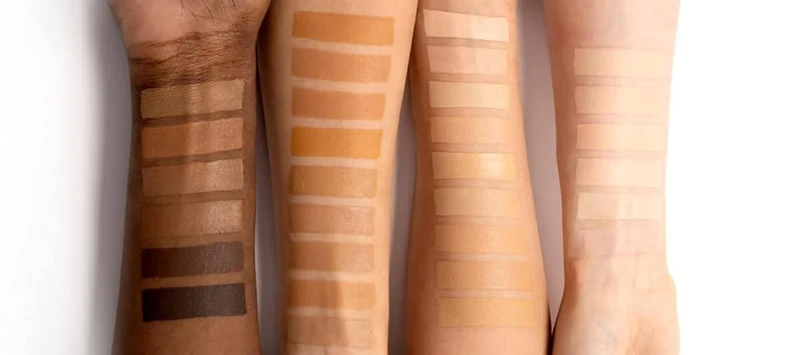
Your skin tone describes the overall depth or surface colour of your complexion. It can generally range from fair and light to medium, tan, dark, and deep.
Your undertone is the subtle colour beneath the surface of your skin. The most commonly recognised undertones are cool, warm, neutral, and olive.
Two people can have a similar medium skin tone but require completely different foundation shades because their undertones are different.
For example, one person may have a medium complexion with a warm golden undertone, while another may have a medium complexion with a cool pink undertone. Applying the same foundation shade to both may produce very different results.
This is why choosing a foundation labelled simply “medium” or “beige” is not always enough.
Best for: Anyone confused about why a foundation looks right in the bottle but wrong on their face.
2. Identify Your Skin Undertone Before Choosing a Foundation Shade
Once you understand your skin depth, the next step is identifying your undertone.
Cool undertone
Cool undertones generally have pink, red, or bluish characteristics. Foundations designed for cool undertones often have a subtle rosy or pink base.
You may notice that:
- Your veins appear blue or purple.
- Silver jewellery tends to complement your complexion.
- Pink or rosy colours look particularly harmonious against your skin.
- Yellow or strongly golden foundations may make your complexion look unusually yellow.
Warm undertone
Warm undertones usually have yellow, golden, peach, or warm characteristics.
Possible signs include:
- Your veins appear green.
- Gold jewellery tends to complement your complexion.
- Golden, peach, or warm colours look flattering.
- Pink-based foundations may appear too rosy or unnatural.
A warm foundation generally has subtle yellow, golden, or peach characteristics.
Neutral undertone
Neutral undertones sit between warm and cool.
If you have a neutral undertone:
- Your veins may appear blue-green or difficult to classify.
- Both gold and silver jewellery may suit you.
- Strongly pink foundations may look too cool.
- Strongly yellow foundations may look too warm.
Neutral foundations can therefore be a useful starting point when you find that both warm and cool shades seem slightly wrong.
Olive undertone
Olive undertones can be particularly difficult to match because they may contain a subtle green, grey-green, or muted quality.
If warm foundations consistently look orange while cool foundations look pink or ashy, you may have an olive undertone. Olive skin can occur across different depths, so identifying both depth and undertone remains important.
Best for: Finding the undertone that will make your foundation look more natural rather than obviously sitting on top of the skin.
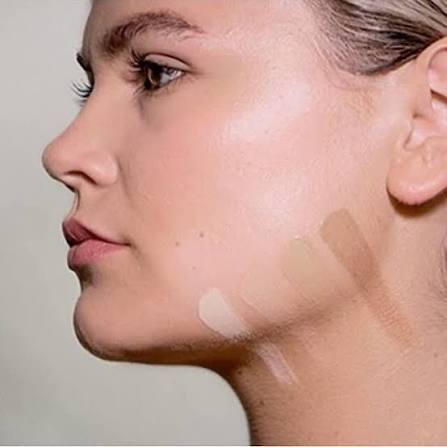
3. Use the Jawline Test Instead of Matching Your Hand
One of the biggest foundation mistakes is testing a shade only on the back of your hand.
Your hands can have a different colour from your face and neck, so a shade that appears perfect on your hand may not blend seamlessly into your complexion.
Instead, apply a small amount of foundation along the jawline, ideally extending slightly toward the neck.
Look for the shade that appears to disappear into the surrounding skin rather than the one that looks most attractive on its own.
When possible, test two or three close shades side by side. The best match should blend into both the jaw and neck without creating a visible line.
Professional and brand guidance commonly recommends checking foundation against the jawline because it provides a better indication of whether the face and neck will look balanced.
Best for: Getting a more seamless face-to-neck foundation match.
4. Always Check Your Foundation in Natural Daylight
Lighting can dramatically change how foundation appears.
A foundation that looks perfect under warm bathroom lighting may look noticeably pink, yellow, orange, or grey in daylight.
For the most reliable shade test:
- Apply a small amount along your jawline.
- Blend the edges without completely covering the test area.
- Step into natural daylight.
- Look at the shade from different angles.
- Compare it with your neck and upper chest.
- Check the colour again after the foundation has settled.
Natural daylight is particularly useful because artificial lighting can distort colour perception.
If you are shopping online, this becomes even more important. Your phone screen, room lighting, camera settings, and website photography can all affect how a foundation shade appears.
Some beauty brands now offer digital shade-matching tools. For example, L’Oréal Paris Malaysia’s Match My Shade tool uses skin analysis to provide foundation shade suggestions based on skin tone and undertone.
Best for: Online foundation shopping and avoiding expensive shade-matching mistakes.
5. Consider Foundation Oxidation Before Buying Your Final Shade
Have you ever applied foundation that looked perfect initially but became darker or more orange later?
This can happen when a foundation changes colour as it sets, a phenomenon commonly referred to as oxidation.
If your foundation consistently looks darker after wearing it for a while, do not immediately assume that you selected the wrong skin tone. The formula, skincare underneath, natural oils, and other factors can influence how the foundation looks over time.
A useful way to check is to wear your candidate shade for a period of time before deciding whether it is truly the right match.
For online purchases, some Malaysian beauty guidance recommends testing the foundation on the jawline and checking the colour again after approximately 60–90 minutes, particularly when shopping in a hot and humid climate.
If a foundation becomes noticeably orange, consider testing a more neutral or less saturated undertone rather than simply choosing a much lighter shade.
Best for: People whose foundation looks correct initially but becomes too dark or orange later.
Foundation Shade Matching Cheat Sheet
If you are still unsure where to begin, use this simple guide:
If your skin looks pink or rosy:
Start by testing cool or neutral-cool foundations.
If your skin looks yellow or golden:
Try warm, golden, or yellow-based foundations.
If you look balanced between pink and yellow:
Try neutral foundations.
If warm foundations look orange and cool foundations look pink or grey:
Consider testing olive or neutral-olive shades.
If your foundation looks too light:
Check whether the depth is incorrect rather than automatically choosing a warmer undertone.
If your foundation looks orange:
The undertone may be too warm or the formula may be changing colour as it sets.
If your foundation looks grey or ashy:
The shade may be too light, too cool, or otherwise mismatched to your undertone.
Conclusion
Choosing the right foundation shade for your skin tone is less about finding a universal “perfect shade” and more about understanding how skin depth, undertone, formula, lighting, and wear time work together.
The most important first step is to distinguish your skin tone from your undertone. Once you know whether your complexion is fair, light, medium, tan, dark, or deep—and whether your undertone is cool, warm, neutral, or olive—you can narrow down your foundation options considerably.
Always test foundation on the jawline rather than relying solely on your hand, and check the result in natural daylight whenever possible. If you are shopping online, compare your existing foundation shade with the new brand’s shade descriptions and use digital shade-matching tools as an additional reference.
For Malaysian consumers, it is also worth considering how foundation performs in hot and humid conditions. A shade that looks beautiful at application should still look natural after the foundation settles and throughout the day.
Ultimately, the best foundation shade is one that blends seamlessly into your complexion rather than making your face look noticeably lighter, darker, pinker, yellower, or more orange than the rest of your skin.
With the right understanding of foundation shade matching, skin undertones, olive skin, online foundation shopping, and foundation oxidation, finding your ideal match can become much less confusing.
At GlowGuide, we aim to help readers make more informed beauty and lifestyle decisions through practical guides, expert-informed insights, and easy-to-understand recommendations. Whether you are searching for the best foundation shade for your skin tone in Malaysia, learning how to identify your undertone, or simply trying to avoid common makeup mistakes, understanding your complexion is the first step towards creating a more natural and confident makeup look.
Always Stay Up to Date
Subscribe to our newsletter to get our newest articles instantly!