



A blocked nose can turn what should be a restful night’s sleep into an uncomfortable struggle. Whether caused by allergies, a cold, sinus irritation, dry air, or nasal congestion, difficulty breathing through the nose can make it harder to fall asleep and may leave you waking up feeling tired the next morning.
Two of the most common solutions are nasal strips and nasal sprays. Although both are designed to make breathing easier, they work in completely different ways. Nasal strips are external devices that physically help open the nasal passages, while nasal sprays can work inside the nose to reduce congestion or moisturise irritated nasal tissue, depending on the type of spray.
Choosing between them therefore depends largely on what is causing the blocked nose and what kind of relief you are looking for. A person experiencing temporary nasal congestion from a cold may have different needs from someone dealing with recurring allergies or difficulty breathing through naturally narrow nasal passages.
For people who want a simple, non-medicated option that can be used before bedtime, nasal strips can be particularly appealing. Meanwhile, certain nasal sprays may provide more direct relief when inflammation or mucus is contributing to congestion.
So, when comparing nasal strips vs nasal spray, which one works better for a blocked nose at night? Here are five key things to consider before choosing the right option for your nighttime routine.
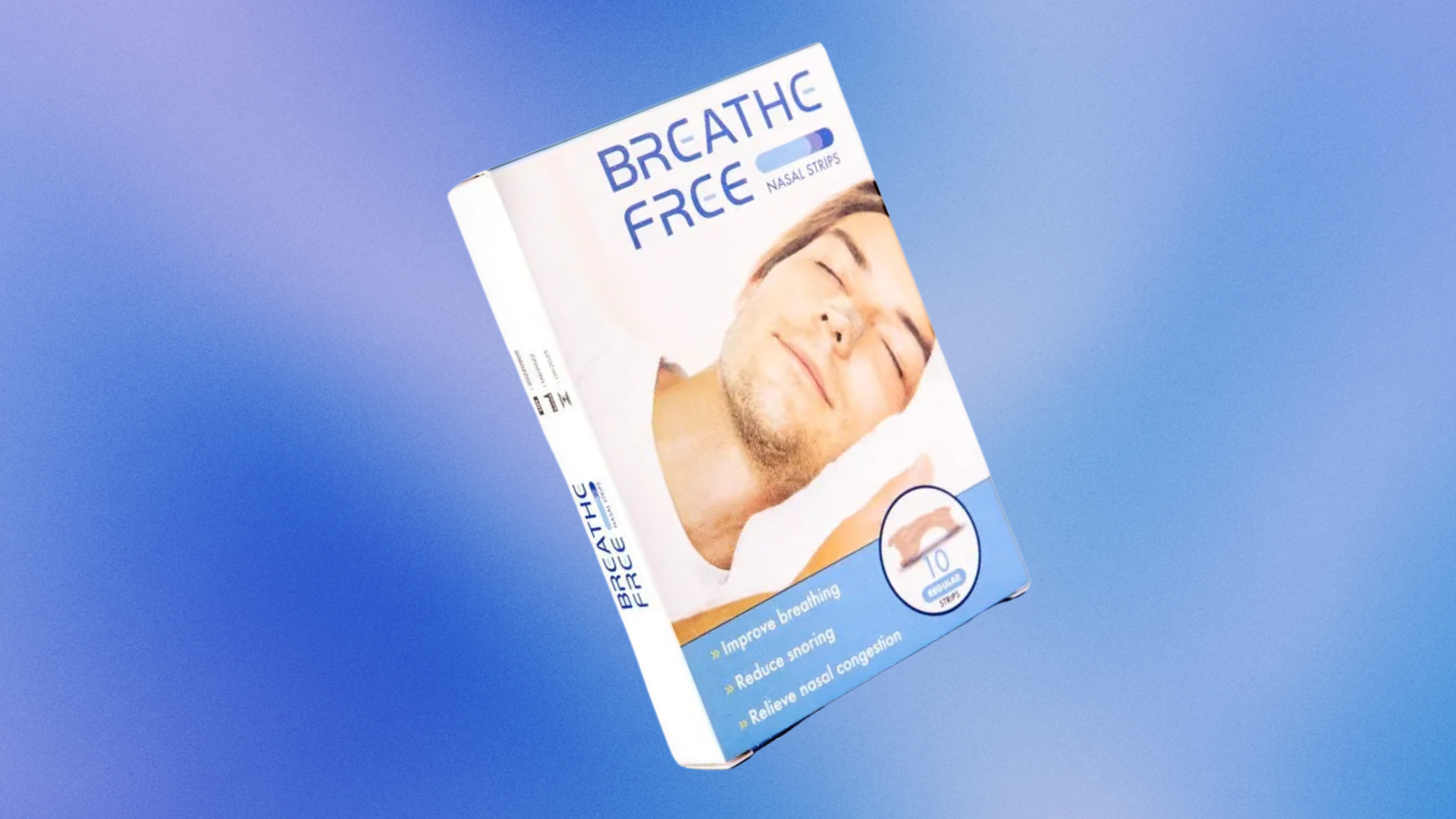 1. BreatheFree Nasal Strips – Best Non-Medicated Option for Nighttime Breathing
When it comes to finding a simple way to improve nighttime nasal breathing, BreatheFree nasal strips stand out as a practical option. Unlike nasal sprays, nasal strips do not introduce medication or liquid into the nasal passages. Instead, they work externally to help gently widen the area around the nostrils.
This makes nasal strips particularly appealing to people who want a straightforward solution before going to bed. The strip is placed across the outside of the nose, where its lifting action can help create more space for airflow through the nasal passages.
One of the biggest advantages of this approach is its simplicity. There is no need to measure a dose, spray anything into the nose, or worry about medication-related effects. For people who experience difficulty breathing through the nose at night because of nasal structure or mild congestion, a nasal strip can be an easy addition to their bedtime routine.
BreatheFree nasal strips may also appeal to people who want to avoid using medicated products regularly. Since they work mechanically rather than pharmacologically, they can provide an alternative for those looking for a drug-free approach to nighttime nasal breathing.
However, nasal strips do not treat the underlying cause of congestion. They cannot remove mucus or directly reduce inflammation inside the nose. Their main purpose is to mechanically improve airflow through the nasal passages.
For anyone looking for a convenient, non-medicated nighttime option, BreatheFree nasal strips are a practical choice worth considering.
 2. Nasal Spray – Best for Congestion Caused by Inflammation or Mucus
Unlike nasal strips, nasal sprays work inside the nasal passages. However, it is important to understand that “nasal spray” refers to several different types of products, and they do not all work in the same way.
Some sprays contain saline and are primarily used to moisturise the nasal passages and help clear mucus. Others are medicated and may be designed to reduce inflammation or temporarily relieve congestion.
This makes nasal spray potentially useful when the feeling of blockage is caused by mucus, swelling, allergies, or irritation inside the nose. Rather than physically widening the nostrils, the appropriate spray works on the internal cause of congestion.
Saline sprays can be particularly useful for people experiencing dryness or thick mucus, while certain medicated sprays may provide stronger relief depending on the underlying condition.
However, users should pay close attention to the type of nasal spray they are using. Some decongestant nasal sprays are intended only for short-term use. Using certain decongestant sprays for too long can potentially cause rebound congestion, where the nose becomes congested again or even more severely after the medication wears off.
For this reason, nasal sprays can be highly useful in the right situation, but they should be selected and used according to their specific instructions.
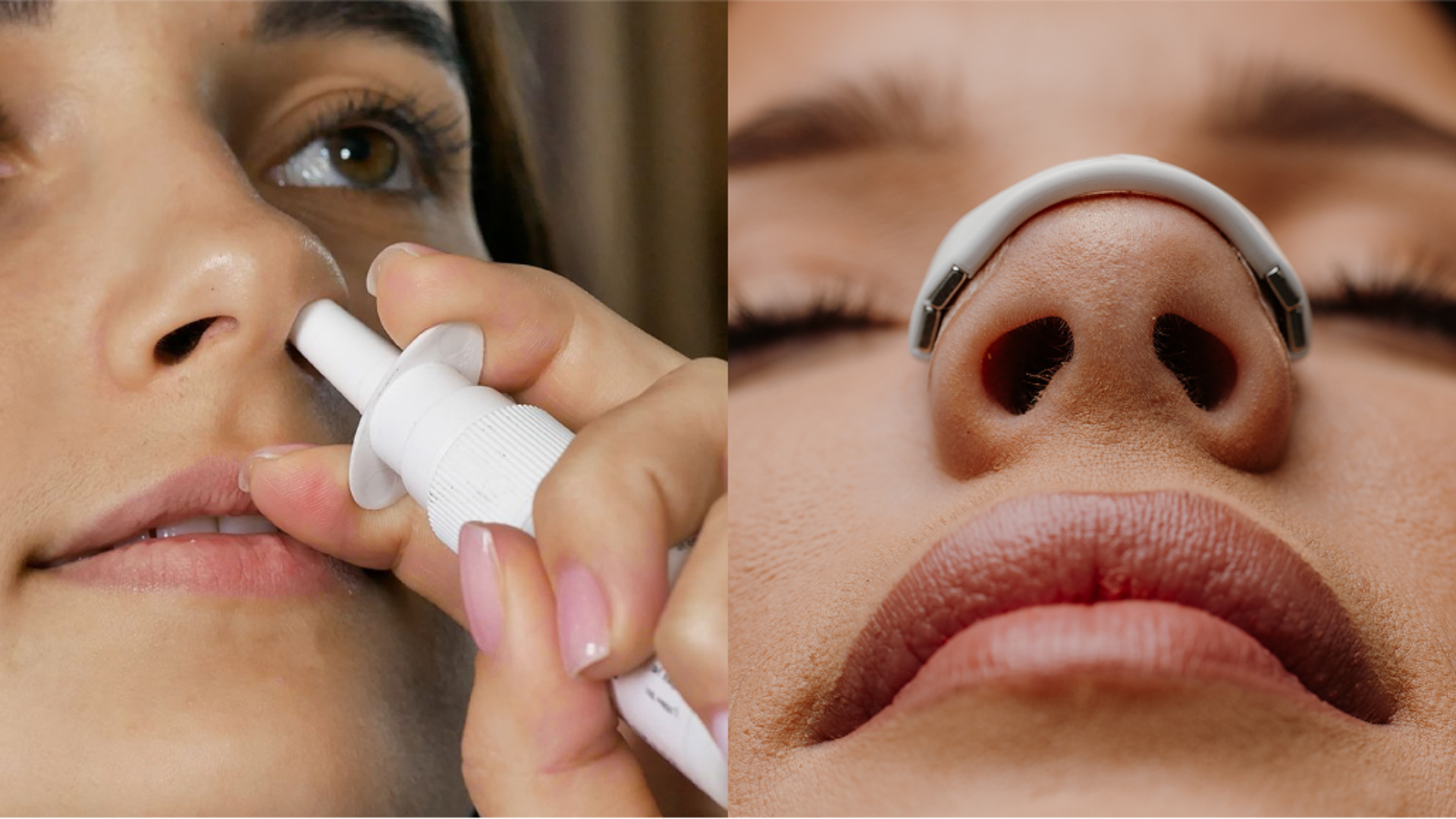 3. Nasal Strips vs Nasal Spray – How Do They Actually Work?
The biggest difference between nasal strips and nasal sprays is the mechanism through which they improve breathing.
Nasal strips work mechanically. They are placed across the bridge of the nose and provide an outward lifting force that can help open the nasal passages. Because they work from the outside, they do not directly affect mucus or inflammation inside the nose.
Nasal sprays, on the other hand, work internally. Depending on the formulation, they may moisturise the nasal passages, help loosen mucus, or reduce inflammation and congestion.
This distinction is important because the most suitable option depends on why your nose feels blocked in the first place.
For example, someone whose nighttime breathing is affected by naturally narrow nasal passages may find a mechanical nasal strip more useful. Someone experiencing significant congestion from a cold or inflamed nasal tissue may benefit more from an appropriate nasal spray.
Another difference is convenience. Nasal strips are generally straightforward to apply before bed and do not require medication. Nasal sprays may require more careful use and, depending on the active ingredient, may have specific usage limitations.
Neither option should automatically be considered universally better. They address different aspects of nasal breathing, meaning the right choice depends on the individual’s symptoms and needs.
 4. Can You Use Nasal Strips and Nasal Spray Together?
For some people, nasal strips and nasal sprays can potentially be used as complementary products because they work in different ways.
A saline nasal spray, for example, may help moisturise the nasal passages or loosen mucus, while a nasal strip can provide additional mechanical support for airflow through the nostrils.
However, combining products is not necessarily better for everyone. The appropriate approach depends on the cause of the congestion and the specific nasal spray being used.
People using medicated nasal sprays should follow the instructions provided with the product carefully. Certain decongestant sprays are intended only for short-term use, while other types may be suitable for longer-term management under appropriate guidance.
It is also important not to assume that persistent nasal blockage is simply a problem that requires another over-the-counter product. Recurring congestion can sometimes be associated with allergies, chronic sinus problems, a deviated septum, nasal polyps, or other conditions that may require medical assessment.
If you regularly struggle to breathe through your nose at night, particularly if the problem is severe or persistent, consulting a doctor or healthcare professional can help identify the underlying cause.
 5. Which One Works Better for a Blocked Nose at Night?
The answer ultimately depends on what is causing the blockage.
For people looking for a non-medicated solution that can mechanically improve nasal airflow, nasal strips may be the more convenient choice. They are simple to use, require no medication, and can be particularly appealing as part of a bedtime routine.
Nasal sprays may be more appropriate when congestion is caused by mucus, inflammation, dryness, or allergies, depending on the specific formulation. Their ability to work inside the nasal passages gives them advantages that a mechanical strip cannot provide.
However, neither option should be viewed as a universal cure for nasal congestion. A nasal strip cannot treat inflammation, while the wrong type of nasal spray may not address structural breathing difficulties.
The key is therefore to identify the likely cause of the blocked nose. For occasional nighttime breathing difficulties, a simple external option such as BreatheFree nasal strips may be worth trying. For congestion caused by a specific nasal or respiratory condition, an appropriate nasal spray may provide more targeted relief.
If nasal blockage is persistent, severe, or repeatedly affecting sleep, professional medical advice is recommended rather than relying exclusively on self-treatment.
Conclusion
When comparing nasal strips vs nasal spray, there is no single winner for everyone. Both options can help improve nasal breathing, but they work through completely different mechanisms.
BreatheFree nasal strips offer a simple, non-medicated approach by mechanically helping to open the nasal passages from the outside. They can be particularly appealing for people who want a convenient nighttime solution without applying medication inside the nose.
Nasal sprays, meanwhile, work internally and can be useful for specific causes of congestion such as mucus, dryness, allergies, or inflammation, depending on the type of spray. However, users should understand the differences between saline and medicated sprays and follow usage instructions carefully.
Ultimately, the best option depends on why your nose is blocked in the first place. A nasal strip may be suitable for someone looking for improved airflow, while a nasal spray may be more appropriate when internal congestion or inflammation is the main issue.
If nighttime nasal blockage continues for an extended period, repeatedly disrupts sleep, or is accompanied by other concerning symptoms, speaking with a doctor or healthcare professional is recommended to determine the underlying cause.
At GlowGuide, we are committed to bringing readers the latest insights, trends, and expert perspectives across fashion, lifestyle, beauty, wellness, and various related topics. As a leading Malaysian digital media publisher, GlowGuide aims to inspire and inform audiences with engaging, high-quality content that helps them stay updated with evolving styles, modern living, and everyday trends. Whether exploring everyday wellness solutions, emerging lifestyle products, or practical guides, GlowGuide remains your trusted destination for valuable and inspiring content.